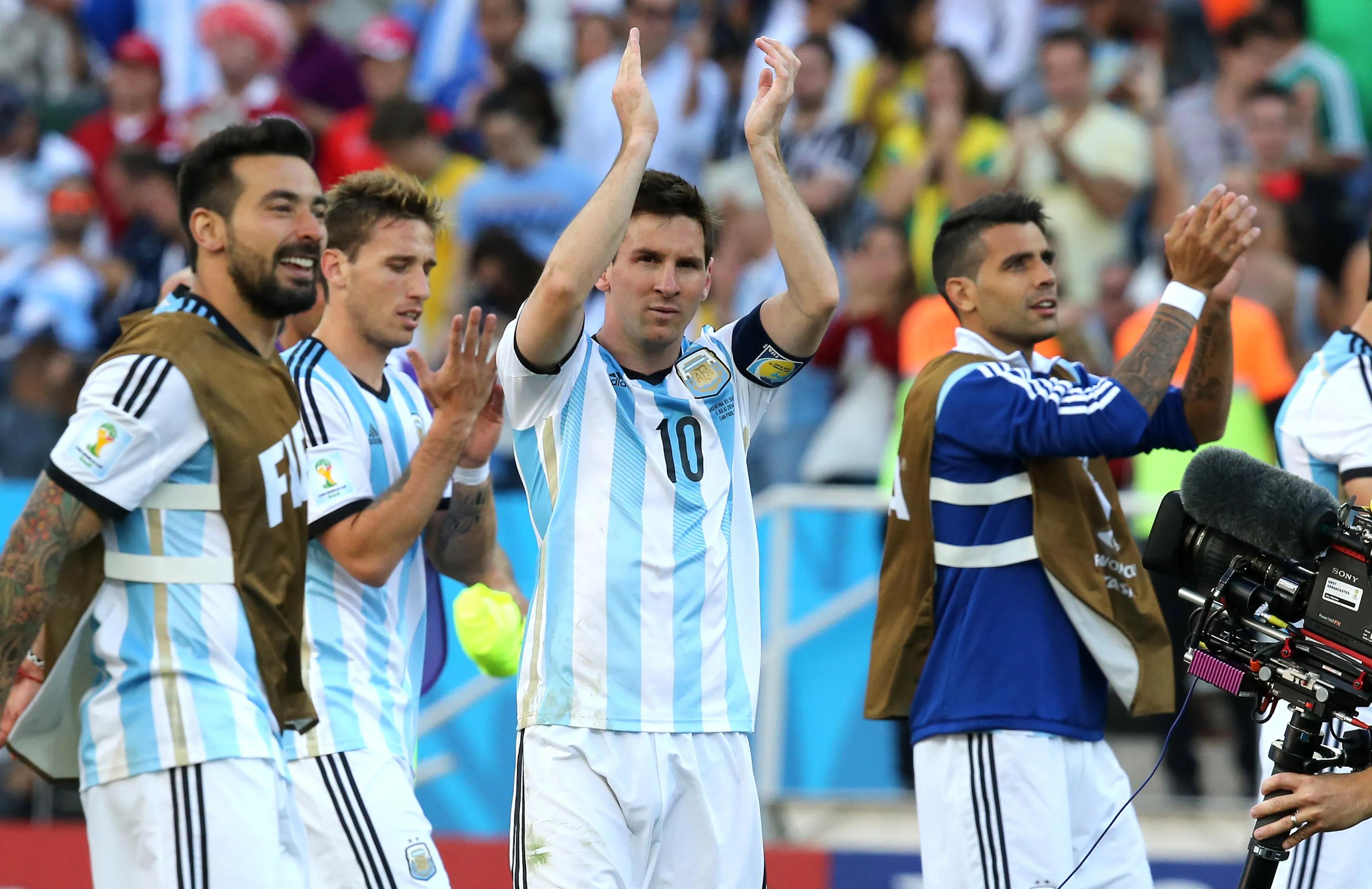
Let me take you back to a steamy afternoon in Sao Paulo, Brazil, 2014, where Lionel Messi was busy doing that thing he does, which is making grown professionals look like they've never kicked a football before. Argentina were facing Switzerland in the last 16, and the entire build-up revolved around one question: can anyone possibly slow down this man? Messi had already bagged four gorgeous goals in the group stage, and Argentina had cruised through with three wins from three. The chatter was getting loud, though, with some suggesting La Albiceleste had become a one-man show.
Coach Alejandro Sabella was remarkably honest about it, admitting that whenever you have a player of Messi's calibre, there is naturally going to be some reliance on him. The goal was to spread the burden across the team, but dependence on genius is simply part of the deal. Across the dressing room, Switzerland's respected German coach Ottmar Hitzfeld was asked how he planned to contain the Argentine wizard. His response was gloriously confident: any defence will struggle against Messi, but problems exist to be solved. Come back tomorrow and we will show you our solution. Spoiler alert: the solution did not work.
Over 120 grueling minutes of enthralling football, the Swiss threw up a disciplined, stubborn wall that frustrated Argentina for long stretches. But Messi still managed to sprinkle his magic like confetti throughout the contest. One devastating drop of the shoulder saw him ghost between Valon Behrami and Ricardo Rodriguez in a move that defied physics. Later, substitute Gelson Fernandes tried to square up to him, only to be left looking like a traffic cone when Messi flicked the ball over his right boot, changed direction in a heartbeat, and accelerated away as if the laws of inertia didn't apply to him.
He came agonisingly close to breaking the deadlock multiple times. One beautifully struck long-range effort sailed just over the bar, and a fizzing low drive forced Diego Benaglio into a superb stop. But you always knew the decisive moment would have Messi's fingerprints all over it. Deep into extra time, with the dreaded penalty shootout looming large, Messi collected the ball midway inside the Swiss half and simply decided enough was enough. He surged forward, leaving Gokhan Inler and Fabian Schar grasping at thin air, then slid the most perfectly weighted pass into the path of Angel Di Maria, who struck a first-time finish beyond Benaglio. Goal. Game over. Argentina into the quarter-finals.
Hitzfeld's post-match verdict was admirably candid: we know Messi can decide a match in a single second. That is his quality. Sabella noted that the longer the game went on, the more Messi was able to run at tired legs, which is a terrifying thought for any opponent. Even Messi himself admitted to some nerves, acknowledging that the inability to score and the threat of any mistake eliminating them was nerve-wracking, and they desperately wanted to avoid penalties. In the end, fortune smiled on them.
Some bonus tidbits for the stats nerds: Messi has provided assists across five World Cups, more than anyone else in history, with Pele, Grzegorz Lato, Diego Maradona, and David Beckham trailing on three editions each. He also won the Player of the Match award four times at Brazil 2014, tying the single-tournament record held by Wesley Sneijder from South Africa 2010. And of course, he went on to claim the Golden Ball at both Brazil 2014 and Qatar 2022, remaining the only player to have won it twice. The man is not from this planet.
Read the Full Match Report →